Adding Resistance Bands to a Mini Stepper: What Actually Works and What Just Gets in the Way
Quick Answer: The included bands work poorly because they anchor at the machine base, which pulls your torso forward and shortens your step. Anchoring the bands to a door or holding them independently fixes the form problem. The most useful additions are rows, bicep curls, and lateral raises — done during the steady portion of your stepping, not while you are trying to push pace.
The bands came in the box, you used them twice, and now they live in a drawer.
That is a reasonable response to how they were designed to attach — but the concept is worth rescuing.
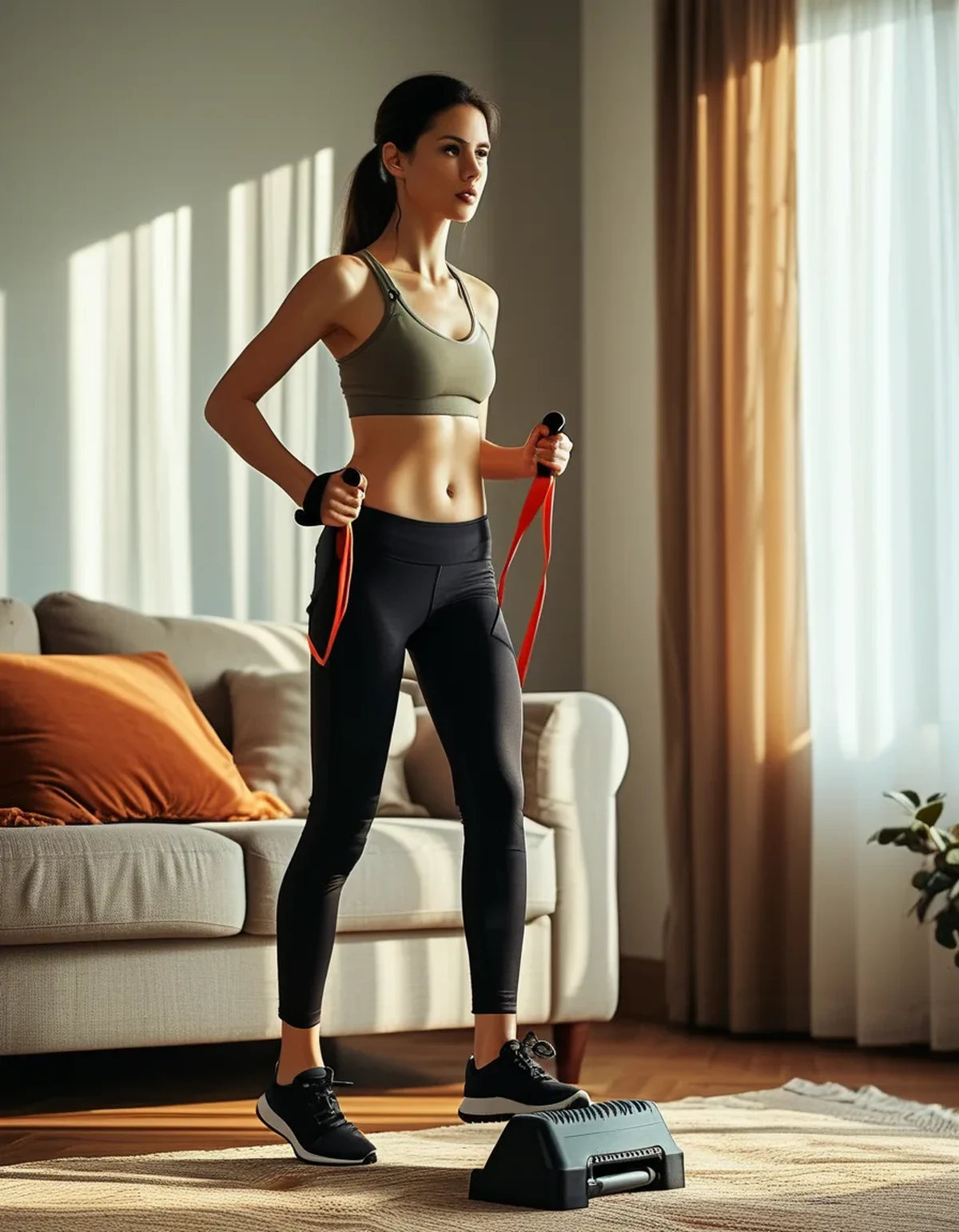
Why do the included bands ruin your stepping form?
Because of where they anchor.
A base anchor pulls you forward and down. Bands clipped to the frame at foot level create a resistance vector that runs diagonally toward the floor. Every pull rotates your torso forward, which is the exact posture that makes mini stepper work uncomfortable.
Forward lean shortens your step. Once your torso tips, your hip range decreases, and the stepping motion becomes a short choppy push through the front of the foot instead of a full press through the heel.
Your calves take over. Short steps with a forward lean shift the work from glutes and quads to calves, which is why people report calf burning as the limiting factor rather than leg fatigue.
The bands are also usually too light to matter for anyone who has been training. The tension is set for a general audience and rarely provides a meaningful stimulus for the upper body.
The combination is the problem: poor position for a small benefit. No wonder they end up in a drawer.
Where should the bands actually anchor?
Three options, in order of usefulness.
A door anchor at chest height. This is the biggest upgrade and costs about $10. A band anchored behind you at chest height lets you press; anchored in front, you row. Both keep your torso upright because the resistance vector is horizontal rather than downward.
Under your own feet, on the stepper platform. Standing on the middle of a loop band and curling or pressing overhead gives you a vertical vector that works with an upright posture rather than against it. Free, and it uses bands you probably already own.
Held with no anchor at all. Band pull-aparts and overhead presses using only the band’s own tension between your hands require no anchor and work perfectly while stepping. This is the most underrated option.
What to skip: anchoring anything at ankle height while stepping. Whatever the exercise, the postural cost is not worth it.
And keep the band tension moderate. You are combining two tasks; the upper body work should be something you could sustain for 30 to 60 seconds while your legs keep moving.
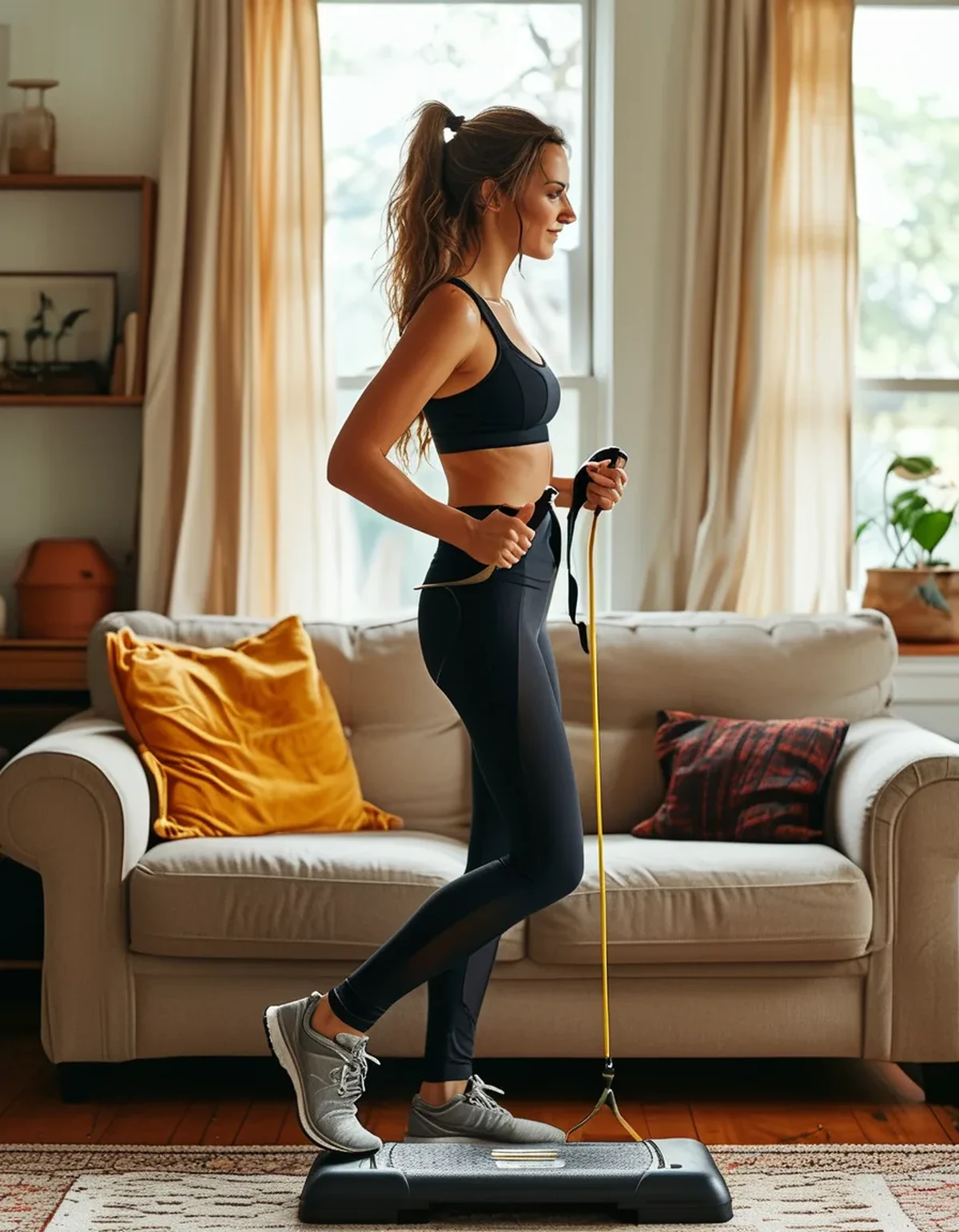
What Nobody Tells You About Combining Upper and Lower Work
The combination has a specific window where it helps and a wide zone where it does not.
Adding arm work raises heart rate substantially at the same leg pace. Upper body muscles are less efficient at oxygen use than legs, so a light band row while stepping can add 10 to 20 beats per minute without any increase in stepping speed. That is the entire benefit and it is a real one.
But it lowers your leg output. Attention and stability both get split. Almost everyone slows their stepping while doing band work, often by enough to cancel the cardiovascular gain.
Which means: use bands during steady-state, never during intervals. During your hard 60-second pushes, the legs should have your full attention. During the 3 to 5 minute steady segments, band work adds intensity that the steady pace alone would not produce.
Alternate rather than combine, if precision matters. Two minutes stepping, one minute band work standing beside the machine, repeat. This preserves quality on both and is genuinely more effective than doing both badly at once.
And watch your grip. Holding bands continuously for 20 minutes fatigues the forearms enough to limit everything else you do that day — which is the cost nobody mentions in the manual.
What does a 25-minute session with bands look like?
Structured so the band work lands where it helps.
Minutes 0-4: warm-up. Stepping only, easy pace, no bands. Let the calves and ankles settle in.
Minutes 4-10: steady with band rows. 30 seconds of rows, 30 seconds of stepping only, alternating. Moderate pace throughout.
Minutes 10-16: intervals, no bands. 40 seconds hard, 80 seconds easy, four rounds. Hands free, full attention on the legs.
Minutes 16-22: steady with overhead presses and pull-aparts. Same 30/30 alternating structure. The shoulders will be the limiting factor, which is fine.
Minutes 22-25: cool down stepping, then calf and hip flexor stretches.
Seasonal note: as it gets darker and outdoor walking drops off in the fall, mini stepper sessions tend to lengthen. Adding bands is a better way to increase difficulty than adding minutes — 25 minutes with upper body work is more useful than 40 minutes of unloaded stepping, and considerably less boring.
FAQ: Mini Stepper Band Questions, Answered
Are the bands that come with the stepper worth using at all?
As free bands, yes — just detach them from the base and use them as regular handheld or loop bands. As the attached system they were designed for, generally no, because the anchor point works against your posture. Nothing is wrong with the bands themselves.
How much resistance should I use while stepping?
Light enough that you could do 20 to 25 reps if you were doing nothing else. You are adding cardiovascular load, not building the upper body — a band heavy enough to challenge your back will stop your legs entirely. If you want real upper body work, do it as a separate block after the stepping.
Can a mini stepper with bands replace a full workout?
It can cover cardiovascular fitness and light muscular endurance well. What it cannot provide is heavy loading for the hinge pattern or the pulling strength that comes from progressively loaded rows. Two sessions of basic strength work per week alongside stepping covers the gap, and the stepper handles the rest.
TL;DR:
- The included base-anchored bands pull your torso forward and shorten your step — that is why they feel wrong.
- Anchor at chest height with a door anchor, stand on a loop band, or use no anchor at all.
- Use bands only during steady-state segments; keep intervals hands-free.
- Band work adds 10 to 20 bpm at the same leg pace, which is the real benefit worth chasing. Try the 30-second alternating structure in your next steady block. It is the version that adds intensity without quietly costing you the stepping quality you came for.
Keep Reading
This article is for general informational and styling purposes only. Fit, sizing, and product availability may vary.