Why a Mini Stepper Only Burns Your Quads, and the Fix
Quick Answer: A mini stepper burns quads because the standard upright posture and shallow step depth put the movement almost entirely at the knee. Glutes only work when the hip travels through a meaningful range, which requires hinging your torso slightly forward, using deeper steps, and pressing through the whole foot rather than the ball. Change those three things and the same machine becomes a glute exercise.
Twenty minutes on the stepper and your quads are burning, your calves are complaining, and your glutes have registered no opinion whatsoever.
Which is frustrating, because glutes were the entire reason you bought the thing.
Why does the standard position load the quads?
Because standing upright turns a hip-and-knee movement into a knee-only movement.
Your quadriceps extend the knee. Your glutes extend the hip. Both are involved in any stepping motion, but the split between them is decided almost entirely by your torso angle.
Stand fully upright on a mini stepper and your hip barely moves — the pedal travels a few inches and your knee does nearly all of the work. The glutes have no meaningful range to work through, so they contribute very little.
This is the same reason a high-bar squat feels quad-dominant and a hip hinge feels glute-dominant. It is not the machine. It is the angle of your torso relative to your femur.
There is a second factor. Mini steppers have short pedal travel by design — usually only 5 to 8 inches compared with 20 or more on a stair climber. Short travel means a small hip range even in a good position, so anything that further reduces hip involvement leaves almost nothing for the glutes.
Fix 1: Hinge forward at the hips
The single change that shifts the most work, and most people are doing the opposite.
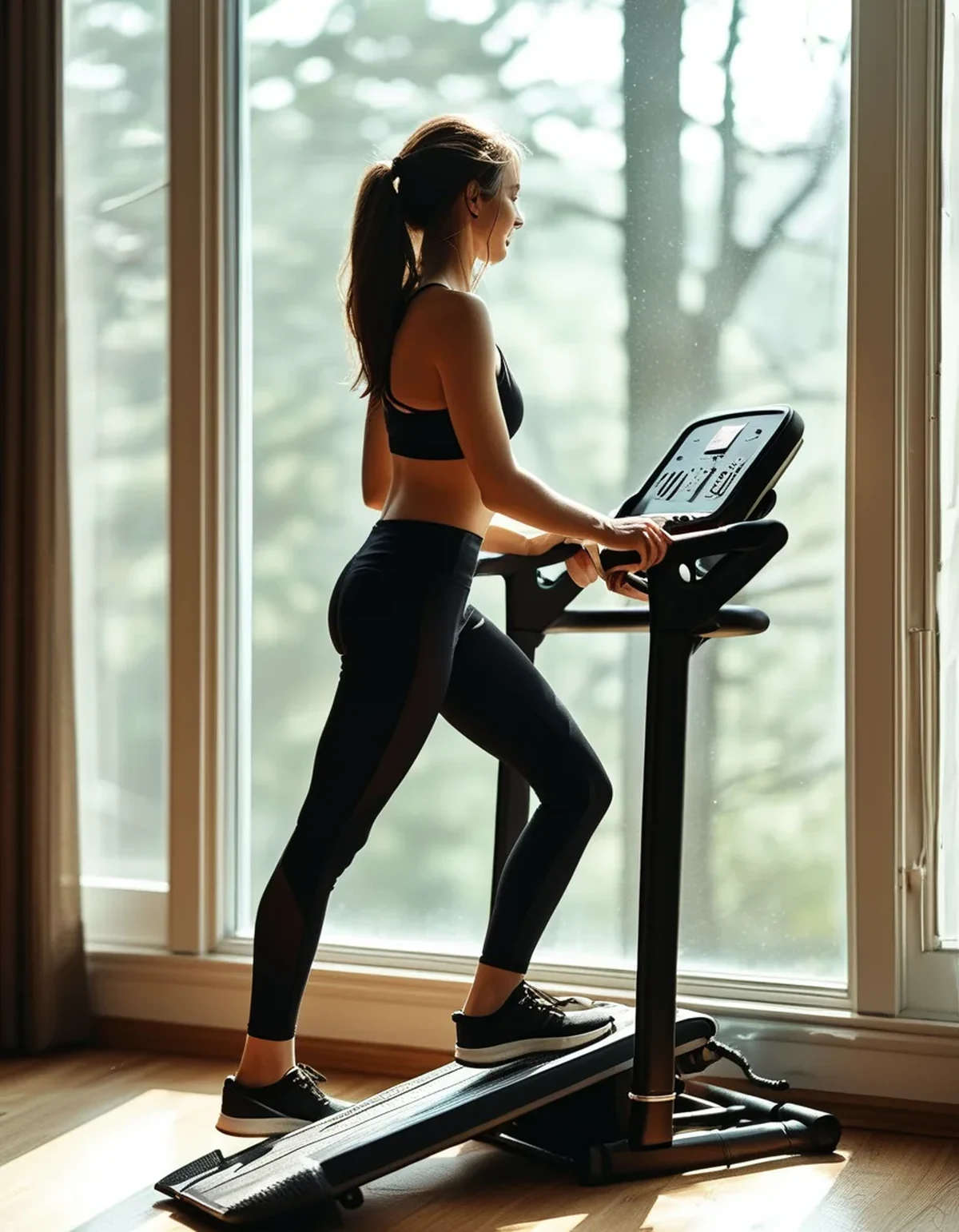
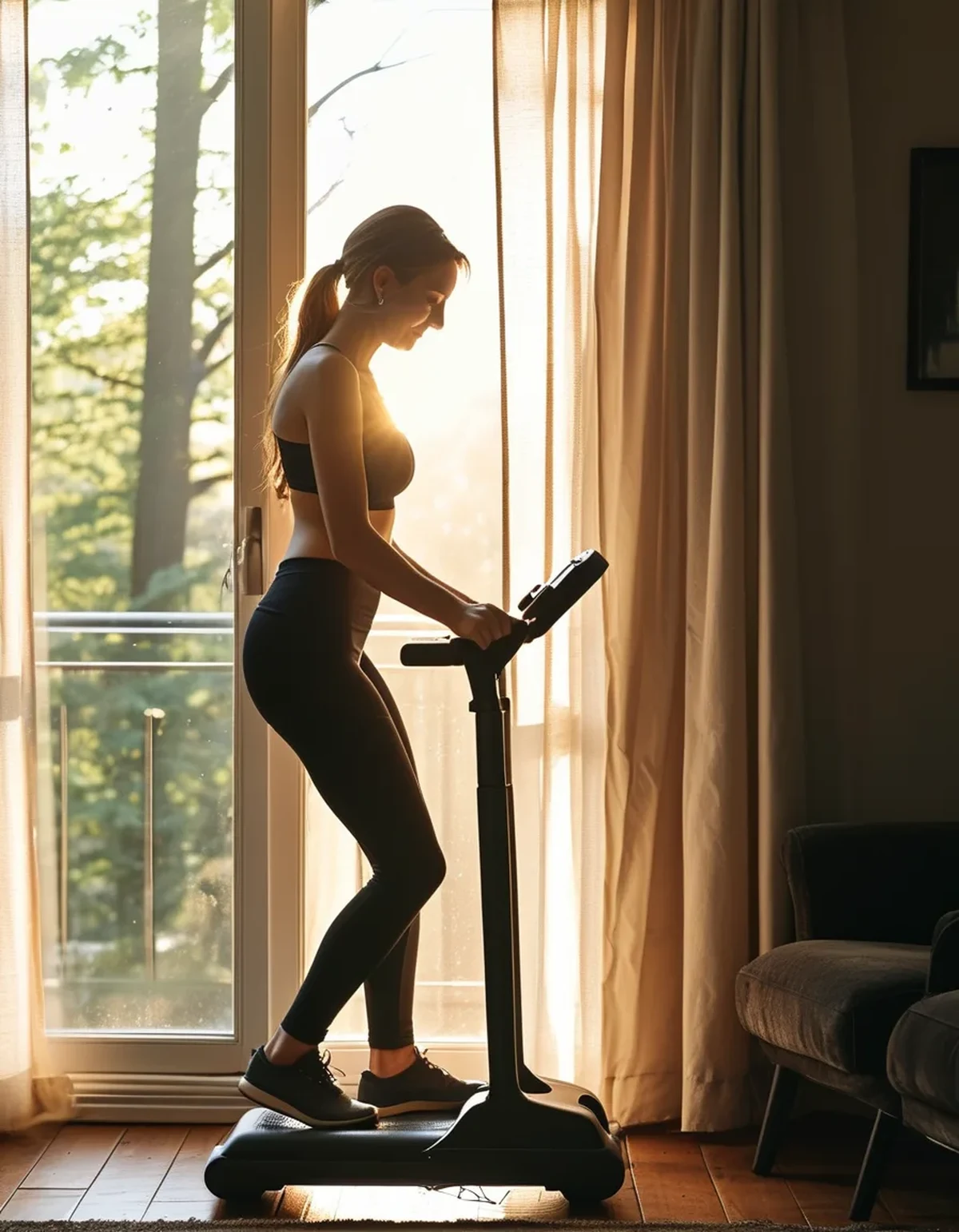
Push your hips back and let your torso come forward to roughly 20 to 30 degrees. Not a rounded back — a hinge, chest up, weight in the middle of the foot. If you have handles, rest your hands on them lightly rather than gripping and pulling.
This does two things. It increases the hip angle change on every step, giving the glutes something to extend from. And it shifts your centre of mass slightly forward over the working leg, which increases the demand on the hip extensors specifically.
How to tell it is working: you will feel the burn move from the front of the thigh to the back and the side of the hip within about 60 seconds. It is quite an abrupt change and it is unmistakable.
The common error: leaning forward from the upper back rather than hinging from the hips. Rounding the spine forward feels similar and does nothing, because the hip angle has not changed. Your hips must travel backward for this to work.
Fix 2: Use deeper steps and a slower cadence
Step depth matters far more than step count, and fast shallow stepping is the default failure mode.
Mini steppers reward fast, small movements — they feel productive, the counter climbs quickly, and the hydraulic resistance is easiest to move through at the top of its range. Almost everyone gravitates to a short, quick step without deciding to.
Short steps mean minimal hip travel, which means minimal glute work.
Instead: push each pedal to the bottom of its travel, and slow down. Aim for a cadence where each step takes about a second rather than half of one. You will do fewer steps per minute and considerably more work per step.
Add a pause. Holding the bottom position for a count of one before pushing the other side removes momentum and forces the working hip to do the whole job.
Expect the numbers to look worse. Your step count will drop by a third and the display’s calorie estimate will drop with it. The estimate was always unreliable and the work you are actually doing has gone up, not down. This is the point at which people abandon the change, so it is worth knowing in advance.
Fix 3: Change where you press through your foot
Pressing through the ball of the foot recruits calves. Pressing through the whole foot and heel recruits glutes.
Watch anyone on a mini stepper and their heels are usually slightly raised, weight forward on the ball of the foot. That position puts the calf complex in charge of the push, which is why calves burn on a machine that is supposed to train hips.
Press through the middle and back of the foot instead, with your heel in contact with the pedal throughout. If the pedal is small, position your foot as far back on it as fits.
Toes up as a cue. Actively lifting your toes slightly makes it almost impossible to push through the ball of the foot, and it forces the load rearward. Uncomfortable at first, effective immediately.
Combined with the hinge, this is the whole fix. Hips back, torso forward, deep slow steps, weight through the heel. Four cues, one position, and it converts a quad-and-calf machine into a genuine hip exercise.
One caution: the new position is harder. Expect to manage 10 to 12 minutes where you previously did 20, and treat that as evidence rather than as a step backward.
Myth vs Fact: Mini Steppers and Muscle Recruitment
Myth: Higher resistance means more glute work. Fact: Higher resistance means more work overall, distributed the same way. If your posture is upright, cranking the resistance gives you harder quad work, not glute work. Position determines distribution; resistance determines magnitude.
Myth: The arm bands make it a full-body workout that changes leg recruitment. Fact: They add modest upper body involvement and change nothing about which leg muscles work. They also encourage an upright posture, which is counterproductive for glutes.
Myth: If your glutes are not sore, they did not work. Fact: Soreness is a poor indicator generally, and mini steppers produce little eccentric loading, which is the main driver of soreness. Feeling the muscle work during the session is the better signal.
Myth: You cannot really train glutes on a mini stepper. Fact: You can train them meaningfully, but not maximally. It is a good tool for volume, blood flow, and low-impact conditioning. It is not a substitute for loaded hip hinges and squats if building glute size is the goal.
FAQ: Mini Stepper Muscle Questions, Answered
How long before the new position feels normal?
About two weeks of regular use. The hinge feels strange at first because the upright position is what your body has practised, and the correction is a genuine motor pattern change rather than just a cue.
Should I hold the handles or not?
Light contact for balance is fine. Pulling on them transfers work to your arms and encourages an upright torso, which undoes the fix. If the handles are the only thing keeping you upright, lower your resistance.
Why do my calves cramp on a mini stepper?
Almost always the ball-of-foot position combined with sustained plantar flexion. Moving your weight back onto the heel usually resolves it within a session or two.
Is a walking pad better for glutes?
Not inherently — flat walking is also fairly quad and calf dominant. An incline walking pad is genuinely better for glutes than either, because incline increases hip extension demand directly.
TL;DR:
- Mini steppers feel quad-dominant because an upright torso removes hip range, leaving the knee to do the work.
- Hinge your hips back so your torso comes forward 20 to 30 degrees — this is the single biggest change.
- Use deeper, slower steps with a brief pause at the bottom, and accept a lower step count.
- Press through the heel and mid-foot rather than the ball of the foot, using a toes-up cue.
Try one minute in the new position tomorrow. The burn moves from the front of your thigh to your glutes within about sixty seconds, and you will not need any other confirmation.
Keep Reading
This article is for general informational and styling purposes only. Fit, sizing, and product availability may vary.