Why Does a Mini Stepper Bother Your Lower Back?
Quick Answer: A mini stepper has a very short range of motion and no handrail, so your body stabilizes with the lower back instead of the legs. Add a forward lean toward a screen and you get sustained low-grade lumbar extension for twenty minutes — which is what most people are actually feeling afterward.
The machine gets blamed. The setup deserves it.
Here is what is loading your back and the three adjustments that take it out.
This is general information, not medical advice.
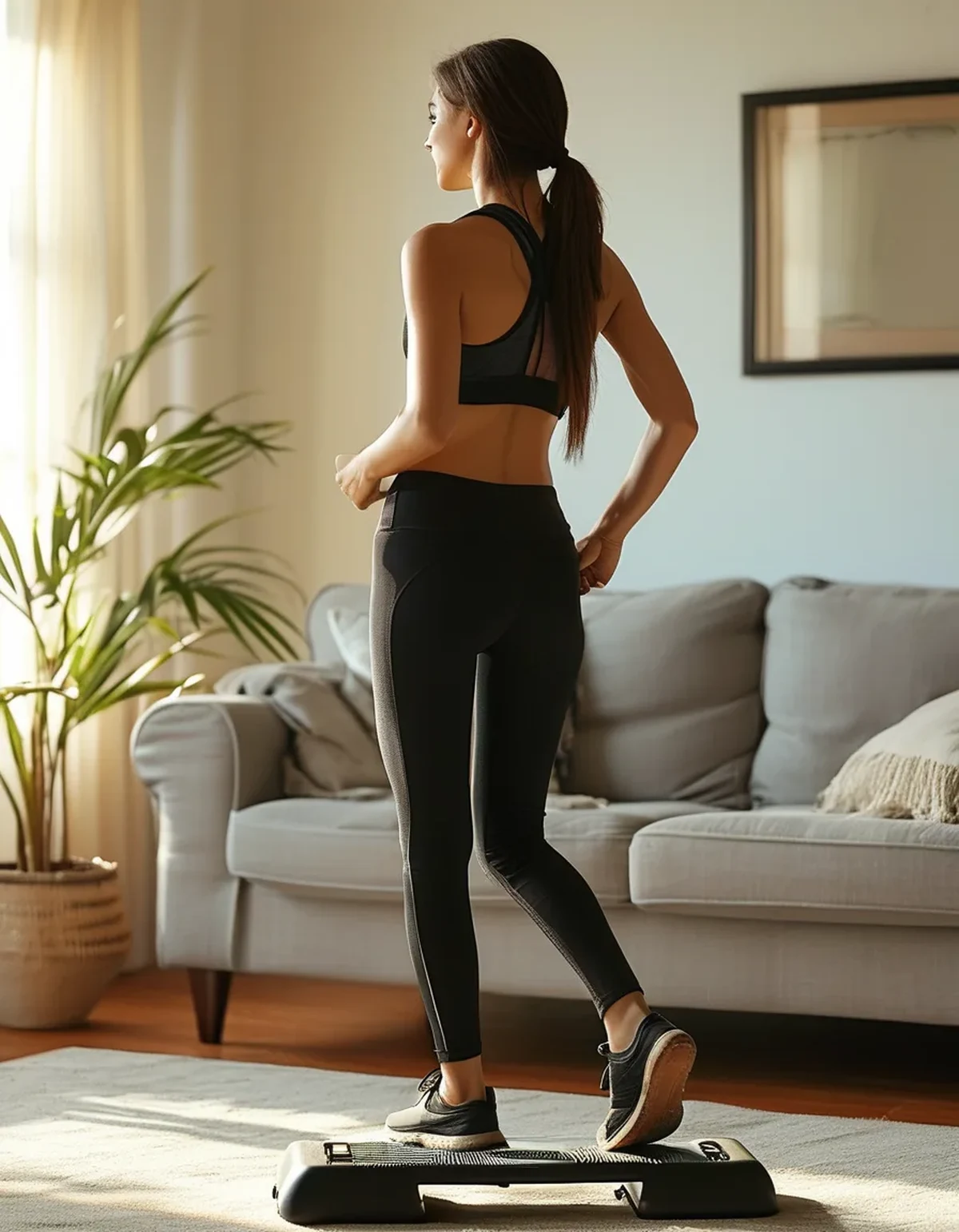
Why does a small machine load the back at all?
Because the stabilizing has to happen somewhere, and a mini stepper removes the two things that usually do it.
On a full stair climber or a staircase, you have a long stride and a handrail. The stride lets the hips and glutes drive the movement through a meaningful range. The rail gives your trunk something external to work against.
A mini stepper has neither. The step depth is typically 15 to 20 cm, which is short enough that the glutes never get into a strong working range, and there is nothing to hold. Your trunk becomes the stabilizer by default, and the muscles that step in are the lumbar extensors — the small ones running alongside the spine, which are built for postural endurance at low load, not for twenty minutes of continuous correction.
That is why the sensation is usually a tired ache across the low back rather than sharp pain, and why it often shows up an hour after you finish rather than during.
Is that the same as it being bad for you?
No. Postural fatigue in a muscle group that was not expecting the job is not damage. It is a signal that the load distribution is off, and it responds quickly to changing the setup.
What is the forward lean doing?
Compounding it.
Most mini steppers get used in front of something — a TV, a laptop on a counter, a phone on a stand. Whatever it is, it usually sits slightly too low, and the head drifts forward to meet it.
A forward head position pulls the upper body’s center of mass in front of the hips. To avoid falling forward you either flex at the hips and hinge, or you compensate by increasing the arch in the lower back. Most people do the second without any awareness of it, because it requires no effort to initiate — the spine simply settles there.
Hold that for twenty minutes while continuously stepping and you have sustained lumbar extension under repetitive load. That is a reliable recipe for the exact ache people describe.
The test is straightforward: do five minutes with the screen off and your eyes on the far wall at eye level. If the back feels different, the screen position was the problem, not the stepper.
What about holding the resistance bands?
The arm bands pull your shoulders forward and down, which tends to make the lean worse rather than better. They are useful for adding arm work but they are not a substitute for something to stabilize against.
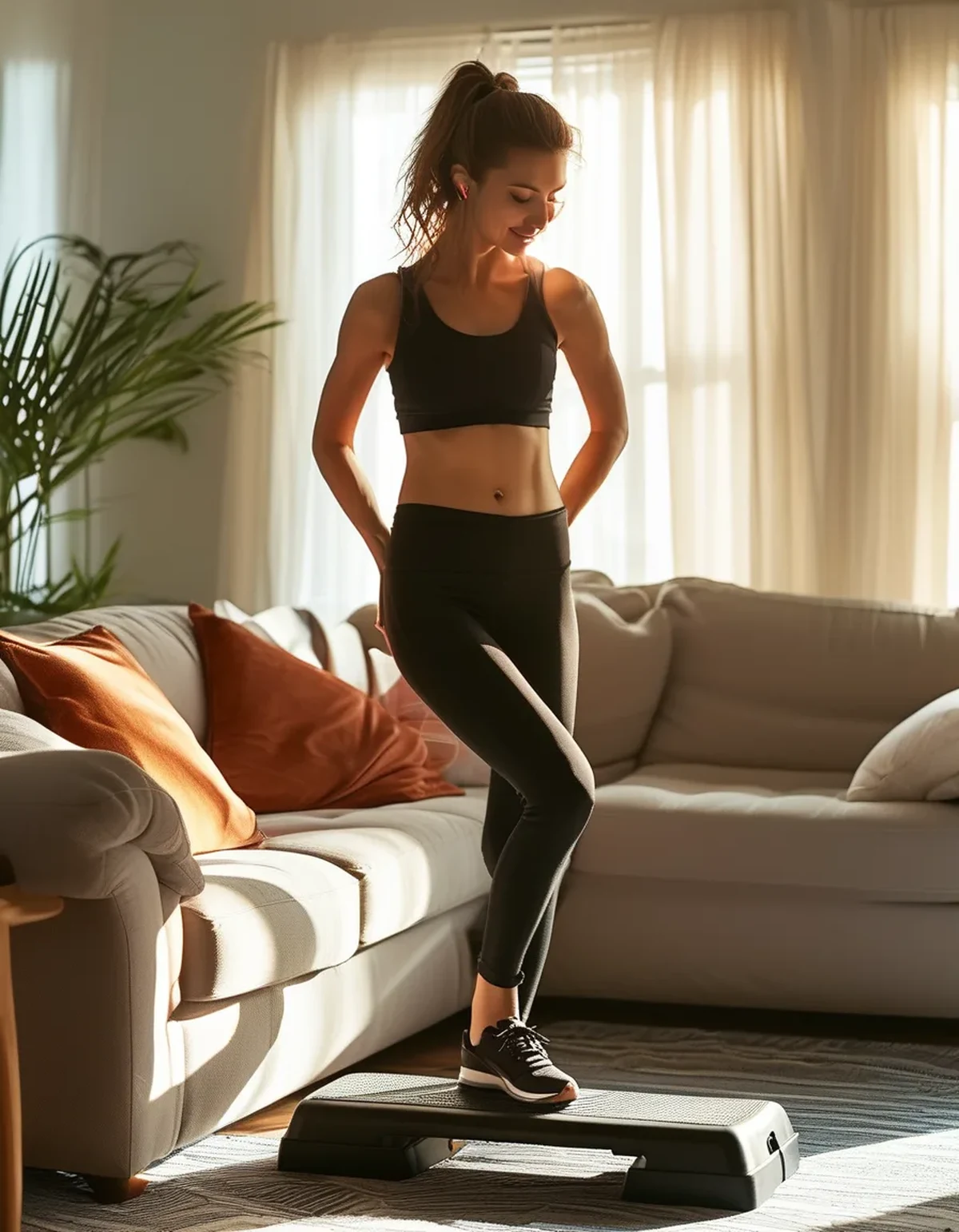
The three-part fix
1. Give yourself something to hold. This is the single biggest change. A countertop, a chair back, a door frame, or a wall at fingertip height. You are not leaning on it — resting two fingers is enough. External contact gives your nervous system a reference point and the lumbar extensors stop working overtime almost immediately.
A useful check: if your fingertips can rest on a surface without you pressing into it, the setup is right.
2. Raise whatever you are looking at to eye level. A laptop on a stack of books, the TV mounted higher, or simply stepping farther back from the screen so the viewing angle flattens. Standing 2.5 to 3 metres from a wall-mounted screen changes the head position more than any cue about posture will.
3. Ride slightly further back on the pedals. Many people stand with the ball of the foot forward, which shifts weight onto the toes and tips the body forward. Center the foot with the arch over the middle of the pedal and the weight settles into the mid-foot, which puts your hips back under your ribs where they belong.
Then add one thing that is not a fix but a diagnostic: stand tall and squeeze your glutes gently for the first ten steps of each session. If the back ache disappears on days you remember to do this, the glutes were switched off and the back was covering.
5 mistakes that make stepper back pain worse
1. Increasing resistance to compensate for the short stride. Higher resistance on a short range of motion increases the trunk stabilization demand without giving the glutes any more range to work in. If the machine feels too easy, add time or add a hold-and-pause, not resistance.
2. Going faster. Speed increases the stabilization frequency, and a trunk that is already the primary stabilizer just does more of the same work. Slower, deeper steps outperform fast shallow ones for almost every goal on this machine.
3. Using it on carpet. A stepper that rocks slightly on soft flooring adds a continuous micro-correction demand, and your back absorbs it. A hard board or a mat rated for equipment fixes this.
4. Stepping through the pain because it is mild. Low-grade postural aching is easy to normalize. It is also the version most likely to persist, because nothing about it is dramatic enough to prompt a change.
5. Blaming the machine and buying a different one. The next stepper will also have a short stride and no handrail. The setup is the variable, not the brand.
FAQ: Mini Stepper and Back Pain Questions, Answered
How long should it take to feel different after changing the setup?
Usually within one or two sessions. Postural load responds fast when it is removed. If nothing changes after a week of holding a counter and looking straight ahead, the stepper probably is not the source.
Should I stop using it entirely if my back hurts?
Not necessarily, but back off duration first — cut to ten minutes, fix the setup, and rebuild. Pain that is sharp, radiates into a leg, or persists at rest is a different situation and worth having assessed.
Does core strength fix this?
It helps, and it is not the primary lever. A stronger trunk still gets tired doing a job it was assigned by a bad setup. Fix the setup first, then general strength work makes the fixed setup more comfortable.
Is a walking pad easier on the back?
Generally yes, for this specific issue — a natural walking stride uses the hips through a fuller range and does not require the same continuous trunk stabilization. If back comfort is your deciding factor, that is a real difference between the two.
Why does it only hurt on some days?
Usually because setup varies more than people realize: a different room, no counter within reach, a lower screen, or a day when you were already stiff from sitting. The days it does not hurt are the days worth studying.
TL;DR:
- A mini stepper has a short stride and no handrail, so the lower back becomes the default stabilizer.
- A screen set too low adds sustained lumbar extension on top of that.
- Rest two fingers on a counter, raise the screen to eye level, and center your foot over the pedal.
- Add time or slower deeper steps rather than resistance if it feels too easy.
- Improvement should show up within a session or two; anything longer means look elsewhere.
The machine is fine. It just quietly outsourced the stabilizing job, and your back took it without asking.
This is general information, not medical advice. Persistent or radiating back pain deserves an assessment.
Keep Reading
This article is for general informational and styling purposes only. Fit, sizing, and product availability may vary.