Is a Mini Stepper Actually a Good Workout, or Just Motion Without Much Result?
Quick Answer: A mini stepper provides a genuine low-impact cardiovascular workout and modest lower-body toning, comparable to brisk walking or light stair climbing, but it has a limited range of motion and low resistance ceiling compared to a full stair-climber machine, making it a solid light-to-moderate option rather than a comprehensive strength or high-intensity cardio tool.
A mini stepper won’t replace a full gym routine, but dismissing it as ‘not a real workout’ undersells what it actually delivers within its limited scope.

What kind of workout does a mini stepper actually provide?
It delivers a genuine low-impact cardiovascular workout, elevating heart rate similarly to brisk walking or light incline walking, while also lightly engaging quads, glutes, and calves through the stepping motion. For general cardio maintenance or light daily movement, it performs its intended job well.
Why does it fall short compared to a full stair-climber machine?
Mini steppers have a significantly shorter range of motion and typically lower maximum resistance than full stair-climbers, meaning the ceiling for both cardio intensity and lower-body strength stimulus is meaningfully lower. It’s a light-to-moderate tool, not a substitute for genuinely challenging cardio equipment.
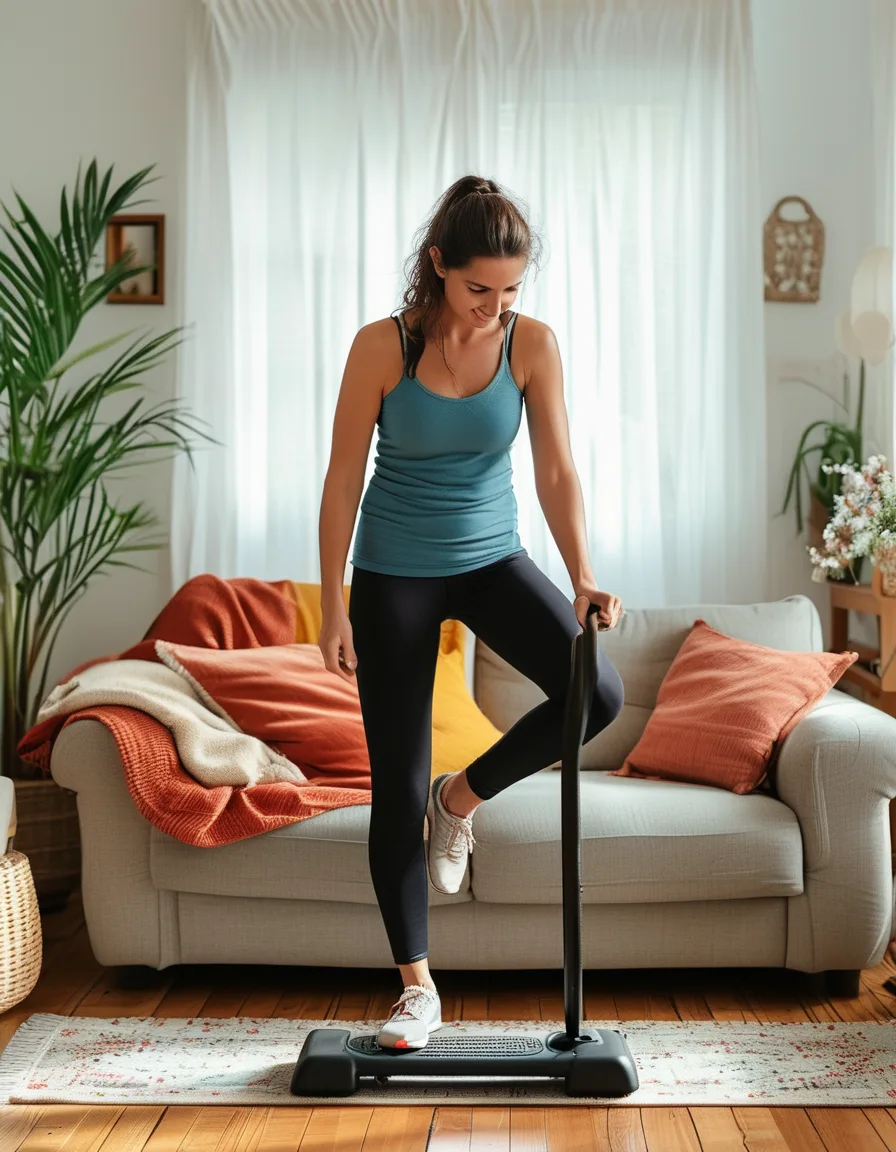
Who does a mini stepper actually make sense for?
Beginners, people returning from injury, or anyone wanting light daily movement in a small space get real value from a mini stepper — it’s an accessible, low-barrier way to add consistent low-impact cardio. Advanced trainees seeking real cardio intensity will likely outgrow it quickly.
Myth vs Fact: Mini Steppers
Myth: A mini stepper burns calories comparably to a full stair-climber or running. Fact: Calorie burn is generally lower given the limited range of motion and lighter resistance ceiling — it’s closer to brisk walking in intensity.
Myth: Mini steppers are just a gimmick with no real fitness value. Fact: They provide legitimate low-impact cardio and light toning, which has real value for the right use case, even if it’s modest.
Myth: Using resistance bands with a mini stepper turns it into a full workout replacement. Fact: Adding bands does increase upper-body engagement and total effort, but it still doesn’t match the intensity ceiling of dedicated cardio or strength equipment.
FAQ: Mini Steppers, Answered
How long should a mini stepper session last to be worthwhile?
Most people get meaningful benefit from 15-20 minutes of continuous stepping, similar to a brisk walk duration.
Can a mini stepper replace a full workout routine on its own?
Not as a sole training method long-term — it works best as light daily cardio or a supplement alongside strength training.
Is it worth adding resistance bands to increase the challenge?
Yes, if the base stepping motion has become too easy — bands add upper-body engagement and raise total effort meaningfully.
TL;DR:
- A mini stepper provides real low-impact cardio comparable to brisk walking
- Its limited range of motion and resistance ceiling cap both intensity and strength benefit
- It’s best suited to beginners, injury recovery, or light daily movement in small spaces
- Adding resistance bands increases challenge but doesn’t match dedicated cardio equipment
It’s not a replacement for serious training equipment — it’s a legitimate, modest tool for exactly what it’s built for.
Keep Reading
This article is for general informational and styling purposes only. Fit, sizing, and product availability may vary.