Mini Stepper Hurting Your Knees? It's Your Form, Not the Machine
Quick Answer: Mini stepper knee pain almost always traces to three form errors: knees caving inward, weight rocking onto toes, and stomping full-depth steps. Fix: feet centered, heels heavy, knees tracking over the middle toes, and shallow controlled steps at a resistance that lets you keep rhythm. The machine is low-impact — sloppy reps aren’t.
The mini stepper’s whole sales pitch is ‘gentle on joints,’ so knee soreness after a week feels like a broken promise. But the machine only removed the impact — it kept faithfully recording every alignment error at 2,000 steps per session, and alignment errors compound at that volume.
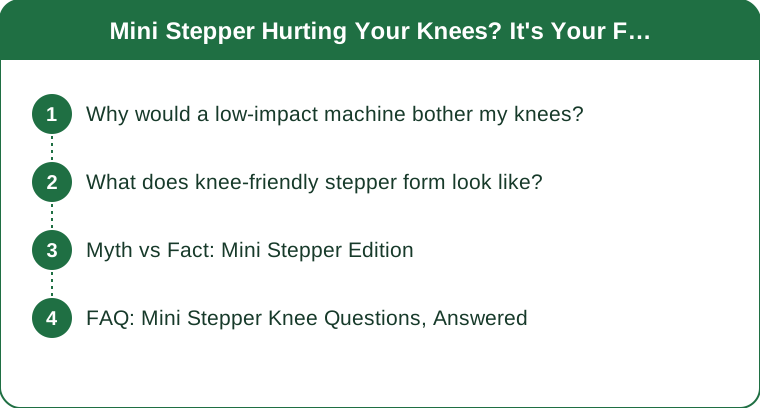
Why would a low-impact machine bother my knees?
Because impact and load path are different things. A stepper eliminates the pounding of running — but each step still sends force through your knee, and where that force travels depends entirely on alignment.
The three errors that reroute it badly:
- Knee valgus (caving inward): the most common — knees drift toward each other on the down-step, loading the joint’s inner structures unevenly. At 30 minutes a day, that’s thousands of misaligned reps weekly.
- Toe-loading: rocking forward onto the balls of your feet shifts work into the quads and the kneecap junction — the classic front-of-knee ache generator.
- Stomping to the bottom: slamming each pedal’s full travel adds a jolt at end-range where leverage on the knee is worst.
None of these hurt on step one. All of them hurt by step ten thousand — which is why week two is when the complaints start.
What does knee-friendly stepper form look like?
Run this checklist at the start of every session (it takes 20 seconds):
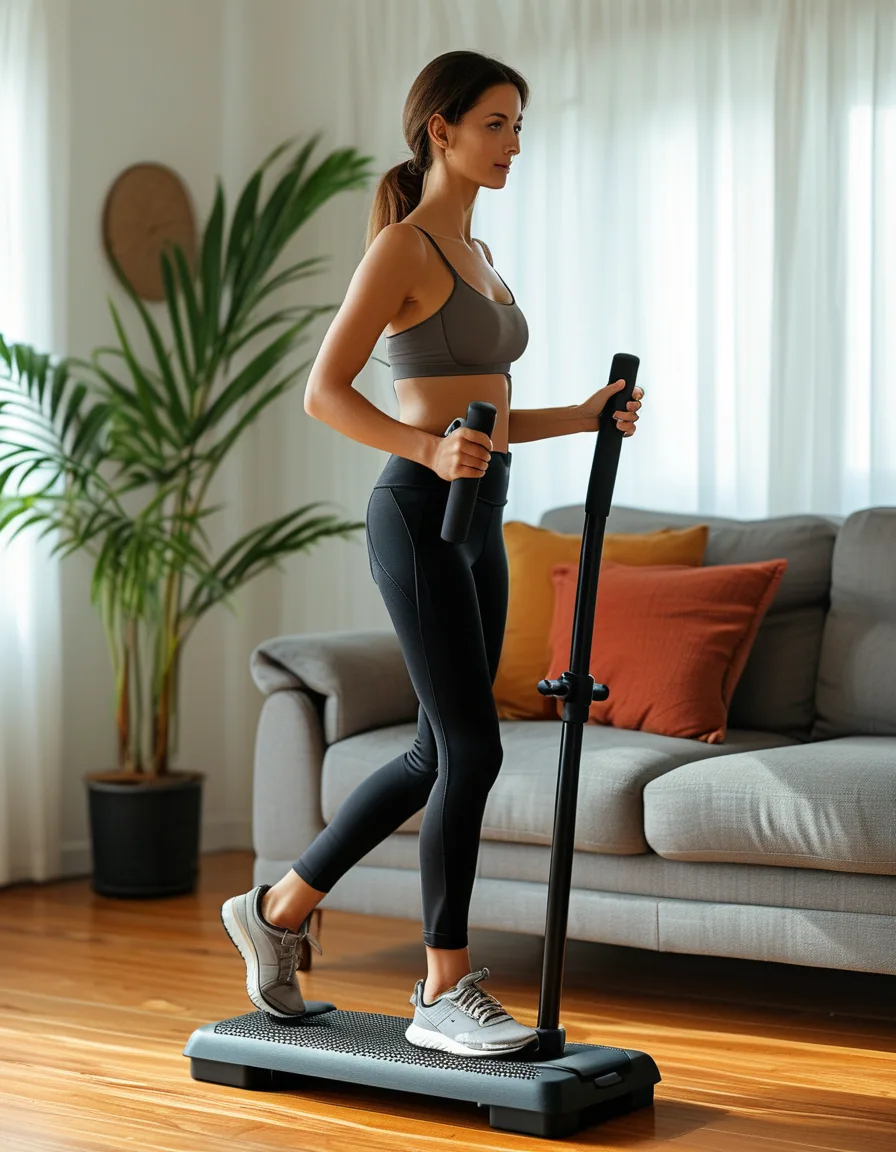
- Feet centered on the pedals, whole foot in contact — then think ‘heels heavy’: pressure through mid-foot and heel keeps the work in your glutes and hamstrings, where it belongs.
- Knees track over your middle toes. Glance down: thigh, knee, and foot should make one line on each step. If knees drift inward, narrow the fix to a cue — ‘press the floor apart’ — which activates the hips that control tracking.
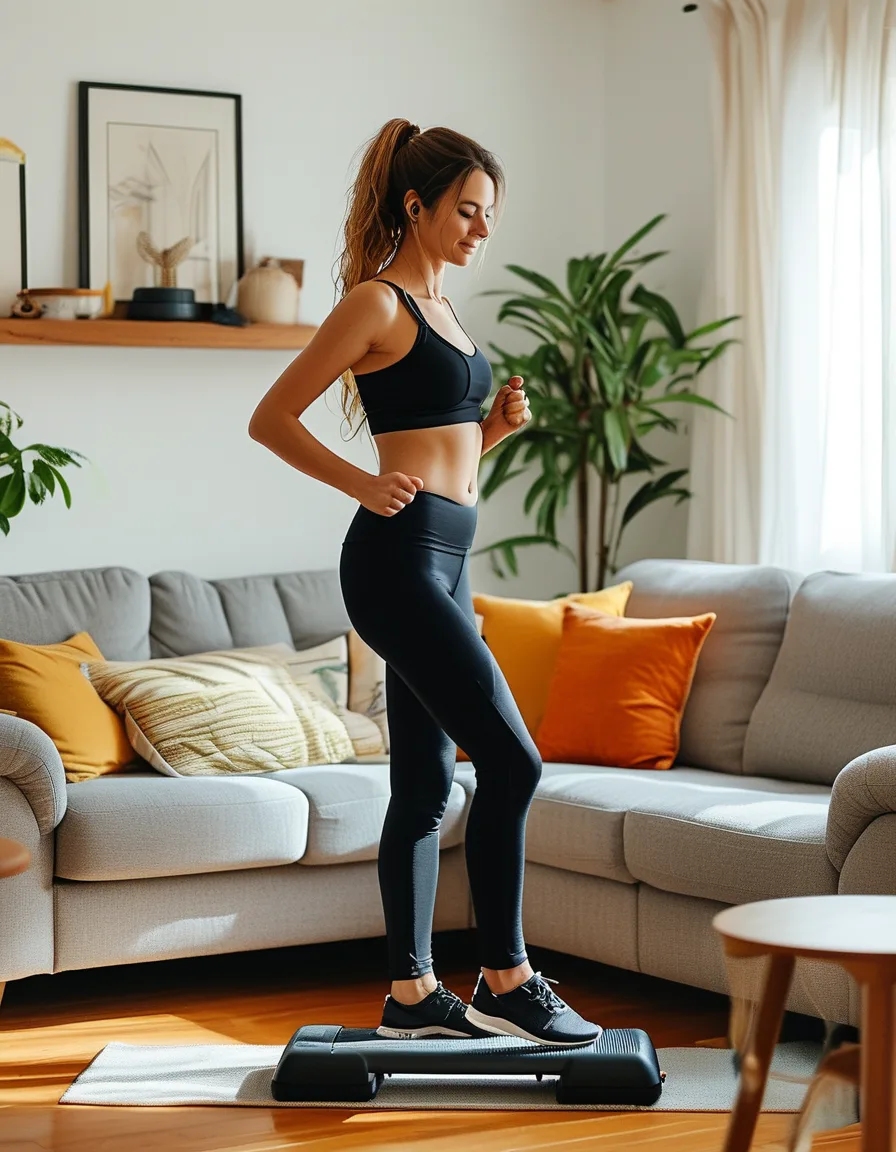
- Shallow, smooth steps: use the middle 60-70% of the pedal travel, never banging the bottom. Rhythm like a metronome, not a march.
- Stand tall, soft knees at the top: never fully lock out; a micro-bend keeps muscles absorbing instead of joints.
- Resistance check: too light forces speed-flailing, too heavy forces grinding — the right setting lets you hold a steady conversation-pace rhythm for 10+ minutes.
Sessions: start at 10-15 minutes and build; going from zero to daily 40-minute sessions is its own knee complaint waiting to happen.
Myth vs Fact: Mini Stepper Edition
Myth: Low-impact means it can’t cause pain. Fact: Low-impact removes collision force, not misalignment. Volume × bad alignment = irritation on any machine ever built. The stepper’s gentleness is real — it just isn’t a form waiver.
Myth: Knee soreness means steppers ‘don’t suit’ your knees. Fact: Unless there’s an underlying condition, soreness usually means the three errors above. Fix form for 2 weeks before writing off the machine. (Sharp pain, swelling, or pain that persists at rest is different — that’s assessment territory, not form-cue territory. This is general information, not medical advice.)
Myth: Holding furniture for balance is cheating. Fact: A fingertip on a chair back while you groove the pattern is smart scaffolding — it lets you focus on knee tracking without wobble. Wean off as balance improves; that progression is the machine quietly training your stabilizers too.
FAQ: Mini Stepper Knee Questions, Answered
How long until fixed form stops the aching?
Mild form-related irritation typically settles within 1-2 weeks of corrected, moderated sessions. Persisting or worsening past that — or any sharp/swelling symptoms — moves it from form problem to see-a-professional problem.
Are twist steppers worse for knees?
They add a rotational element that’s fine for healthy knees with good form but less forgiving of the caving-inward error. Master straight stepping first; earn the twist.
Should I strengthen anything off the machine?
Yes — the caving-knee fix lives in your hips: side-lying leg raises, clamshells, and glute bridges (2-3 sets of 12, a few times weekly) give the tracking cue actual muscle to obey. Ten minutes of hip work makes every stepper session safer.
TL;DR:
- Stepper knee pain = form, volume, or resistance — almost never the ‘low-impact’ machine itself
- The big three fixes: knees over middle toes (‘press the floor apart’), heels heavy, shallow smooth steps
- Resistance set for steady rhythm; sessions built gradually from 10-15 minutes
- Hip strength (clamshells, bridges) is what makes good knee tracking stick
The machine kept its low-impact promise — it was the ten thousand unsupervised reps that needed the coaching. This is general information, not medical advice.
Keep Reading
This article is for general informational and styling purposes only. Fit, sizing, and product availability may vary.