Your Mini Stepper Resistance Dial Is Changing Which Muscles Work
Quick Answer: Low resistance produces short, fast steps driven mostly by calves and quads. High resistance forces a deeper, slower step that recruits glutes and hamstrings. Same machine, same 20 minutes, meaningfully different training effect depending on where the dial sits.
You have been stepping for months and your calves are noticeably firmer while everything else feels the same. That is not a plateau. That is a resistance setting doing exactly what it was set to do.
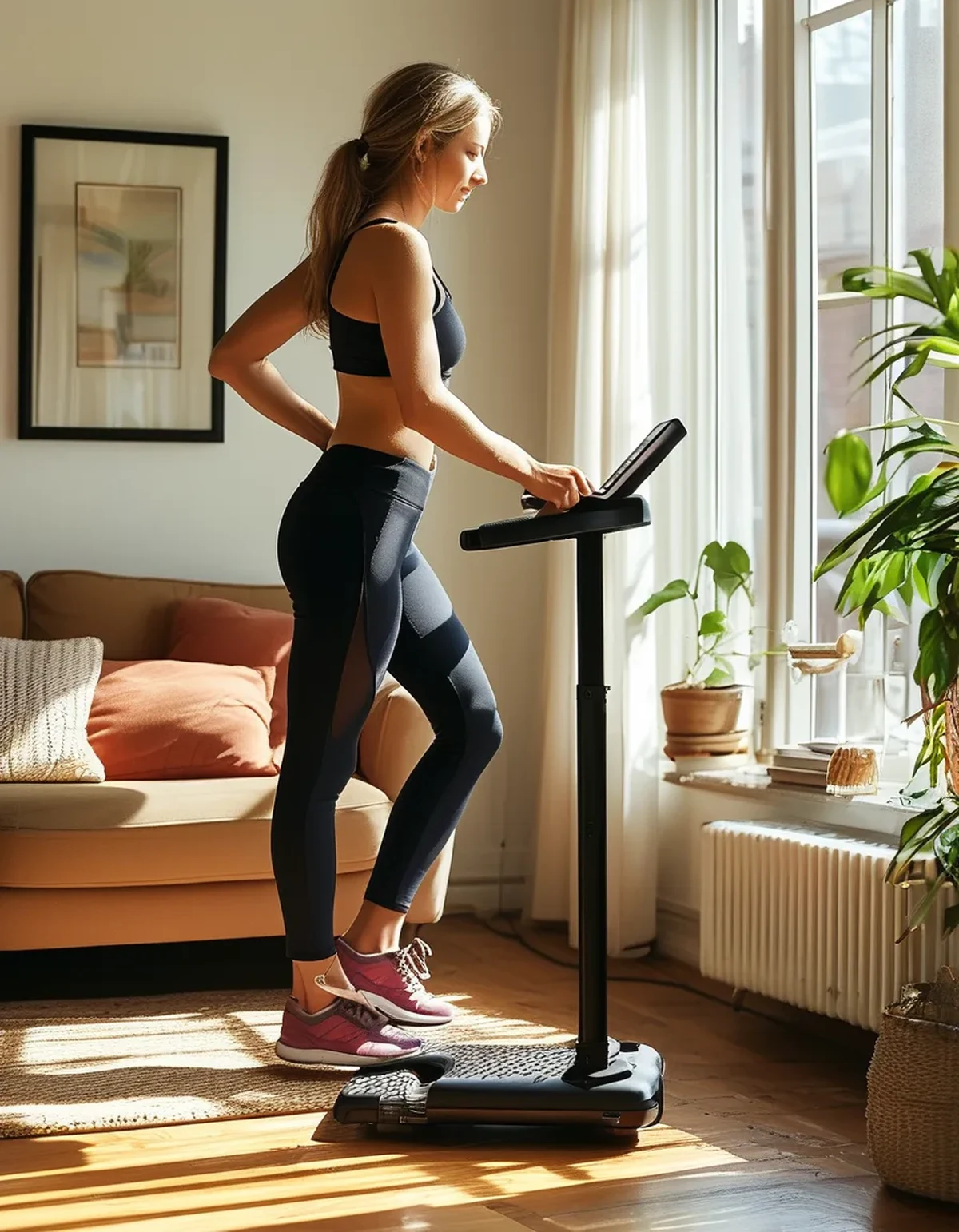
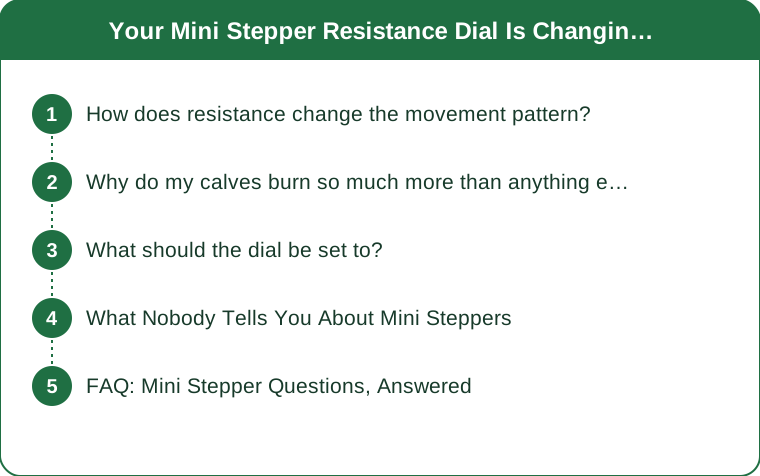
How does resistance change the movement pattern?
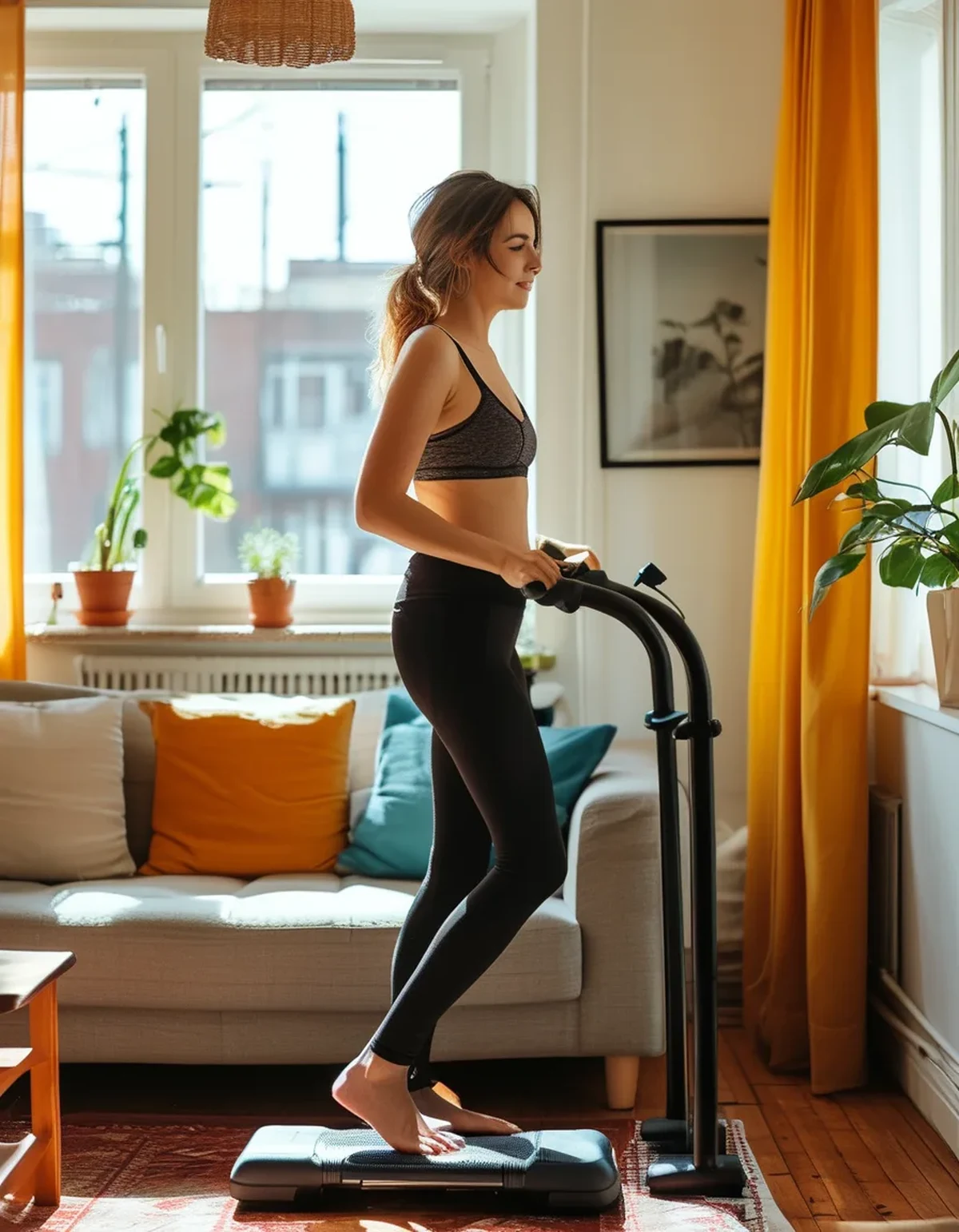
A hydraulic mini stepper resists downward motion. At low resistance the pedal drops fast, so your step is shallow and quick, and the ankle does most of the work.
Turn resistance up and the pedal descends slowly. To move it at all you have to push through a longer range and load the hip, which brings the glutes and hamstrings in.
Step depth is the giveaway. Under 4 inches of travel per step means calf-and-quad dominant. Six to eight inches with a slower cadence means the hip is driving. You can see the difference in a mirror without any equipment or measurement.
Why do my calves burn so much more than anything else?
Because at low resistance the calf is both the prime mover and the stabilizer. It works on the push and again on the return, at a high cadence, for the whole session.
High cadence plus small range is essentially endurance work for the plantar flexors. It produces a real burn and very little else.
The fix is not stepping harder. It is stepping slower against more resistance, which feels counterintuitive because the burn moves and the heart rate briefly drops before it climbs back.
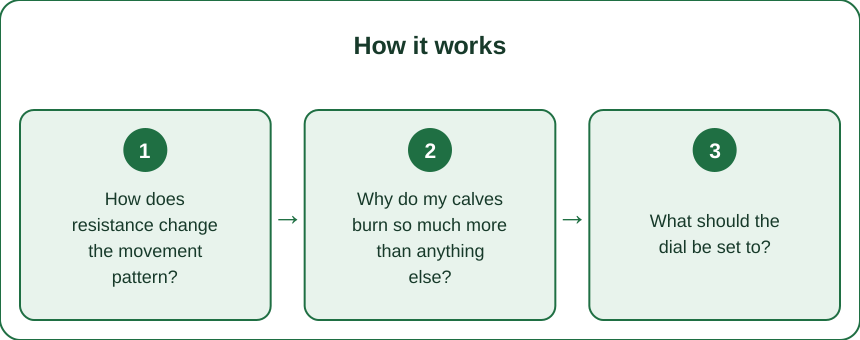
What should the dial be set to?
Rotate rather than picking one setting forever.
- Low resistance, 60-70 steps per minute, 15-20 minutes: conditioning and blood flow, good for recovery days
- Medium, 45-55 steps per minute, 20 minutes: the general default, mixed recruitment
- High, 30-40 steps per minute, 12-15 minutes: strength emphasis, glutes and hamstrings, treat it like a set rather than cardio
A reasonable week is two medium sessions, one high, and one low. That covers the same total minutes you are already doing, distributed across effects instead of stacked on one.
What Nobody Tells You About Mini Steppers
Handle use changes everything. Gripping resistance bands or a handle and pulling adds upper body work but also lets you unload the legs without noticing. If the goal is lower body, let your arms hang or hold them at your ribs.
Foot position matters more than resistance for the glute question. Standing with weight through the mid-foot and heel recruits the hip. Standing on the balls of the feet, which is what most people drift into, locks the work into the calves regardless of the dial.
Hydraulic cylinders warm up. The first three minutes of a session genuinely have more resistance than minute fifteen, because the fluid thins as it heats. If a session feels easier at the end, that is the machine, not you.
And the piece almost nobody mentions: torso angle. Leaning slightly forward from the hips, maybe 10-15 degrees, shifts load rearward into the glutes. Standing bolt upright keeps it in the quads. It is free, and it changes the session more than one notch on the dial.
FAQ: Mini Stepper Questions, Answered
How many minutes a day is worthwhile?
Twenty minutes at medium resistance is a reasonable daily target and stacks well with walking. Benefits come from consistency far more than duration here.
Are the calorie numbers on the display accurate?
No. They ignore your weight, resistance setting, and step depth. Treat the display as a timer and a step counter, nothing more.
Will a mini stepper build my glutes?
It can contribute at high resistance with proper foot position and forward lean, but it will not replace loaded hinges and squats. Think of it as useful volume, not a strength program.
This is general information, not medical advice. If you have knee or ankle pain that worsens with stepping, check with a professional before adjusting resistance upward.
TL;DR:
- Low resistance means fast shallow steps and calf dominance; high resistance recruits glutes and hamstrings
- Step depth and cadence tell you which pattern you are in, no measurement needed
- Mid-foot weight and a slight forward lean matter as much as the dial
- Rotate settings across the week rather than choosing one
Next session, turn the resistance up two notches, slow to about 35 steps per minute, and lean forward slightly from the hips. Five minutes in you will feel exactly which muscles the dial had been leaving out.
Keep Reading
This article is for general informational and styling purposes only. Fit, sizing, and product availability may vary.