Mini Stepper Under a Standing Desk: Does It Actually Work?
Quick Answer: A mini stepper under a standing desk works — with an asterisk per task type. Slow, steady stepping pairs well with calls, reading, and video watching, adding meaningful light activity to hours that were going to be sedentary anyway. It pairs badly with precise typing, detailed mouse work, and anything requiring your best focus, because the sway degrades fine motor control. The setup succeeds when you match stepping to your low-precision hours, keep the cadence conversational, and put the desk height and mat situation right on day one.
The under-desk stepper is the natural second act of a standing desk that turned out to be just standing. The instinct is right — movement beats posture — but the marriage has rules, and the people who quit the combo in week two almost always broke one of the three below.
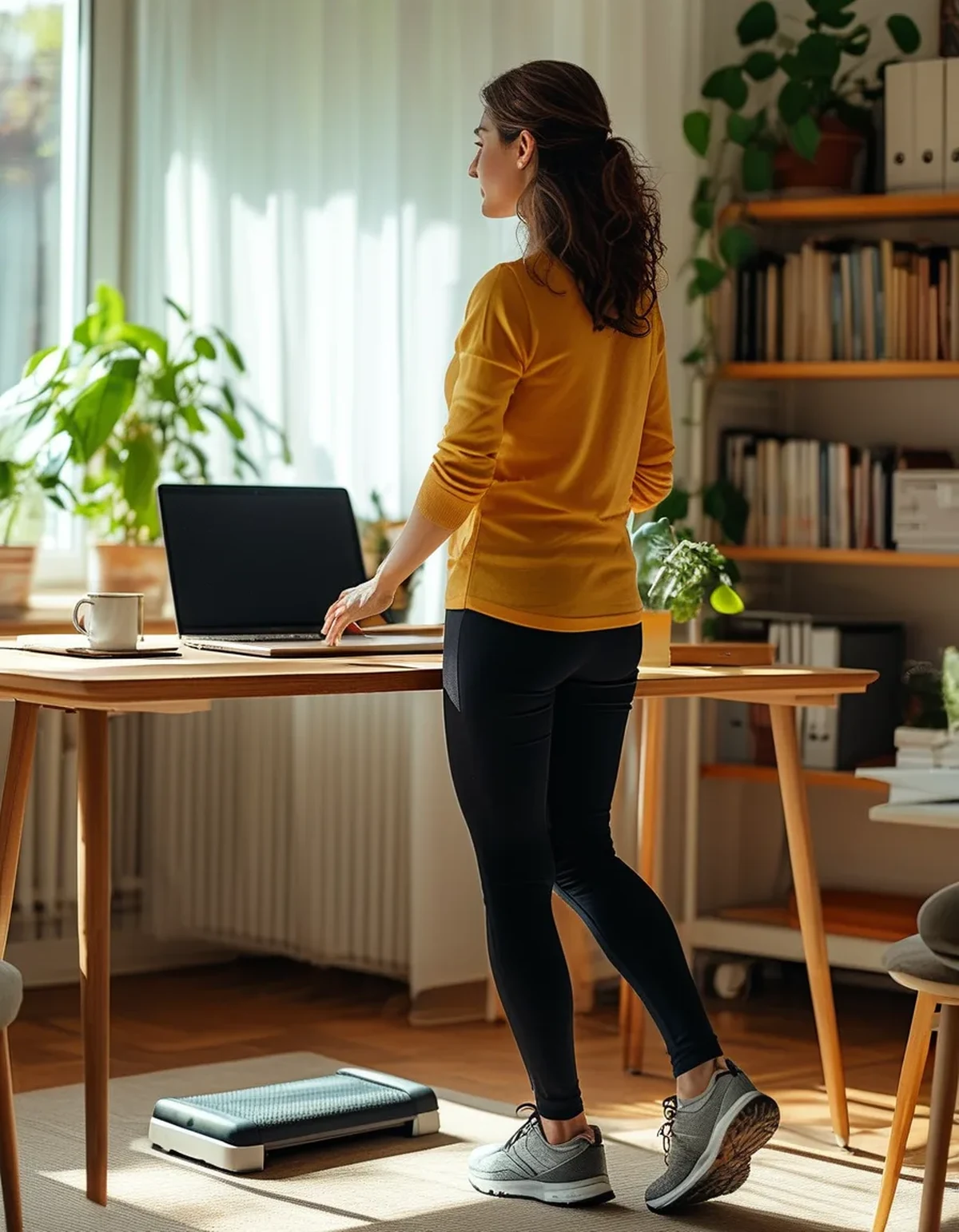
What does stepping while working actually do for you?
It converts dead hours into light activity, which is precisely the category of movement modern desk life deleted.
Slow stepping while working sits in the light-intensity zone — roughly double to triple resting energy burn, in the neighborhood of 100 to 150 extra calories per accumulated hour of actual stepping for most people, versus standing’s modest bump. Across a workday where you accumulate two or three genuine stepping hours, that is a walk’s worth of movement that required zero schedule space.
The less advertised benefits are arguably bigger. Muscle contraction is the mechanism, and stepping supplies it continuously: active calves and thighs pull glucose from the blood and keep the postural system engaged, the thing prolonged sitting — and motionless standing — switch off. Regular movement breaks also reliably beat standing still on leg swelling, stiffness, and end-of-day fatigue.
What it is not: cardio training. Desk-pace stepping will not raise your fitness the way a brisk 30-minute walk or a real stair session does — the intensity is deliberately too low to sweat through a meeting. Think of it as reclaiming the floor of your day, not building the ceiling. The 20-minute walk still earns its slot; the stepper just stops the other eight hours from being zero.
Which work tasks survive stepping, and which do not?
Sort your day into three buckets and the combo starts working immediately.
Green — step freely: phone and video calls where you are mostly listening, reading and reviewing documents, watching recorded trainings, brainstorming, email triage you could do half-asleep. Rhythmic stepping and listening comprehension coexist happily, and many people find calls genuinely improve — movement burns the fidget energy that otherwise becomes tab-switching.
Yellow — step slowly or intermittently: casual typing like chat replies and short emails, light spreadsheet scrolling, video calls where you are on camera (a steady slow cadence reads fine on camera; an enthusiastic one bounces the frame). Drop to a gentle cadence and accept a few extra typos.
Red — feet still: precision mouse work, design and code you care about, numbers requiring accuracy, high-stakes writing, and any call where you are presenting. The sway from alternating leg loading measurably degrades fine motor input, and fighting it costs attention you should be spending on the task.
The practical rhythm that falls out: step during the day’s communication blocks, stand or perch during focus blocks, and sit when you have earned it. Most desk jobs contain two to four green-bucket hours hiding in the calendar — that is the stepper’s territory, and claiming just those hours is the whole win.
How do you set the whole thing up so it lasts?
Five details decide whether the stepper becomes furniture or a habit.
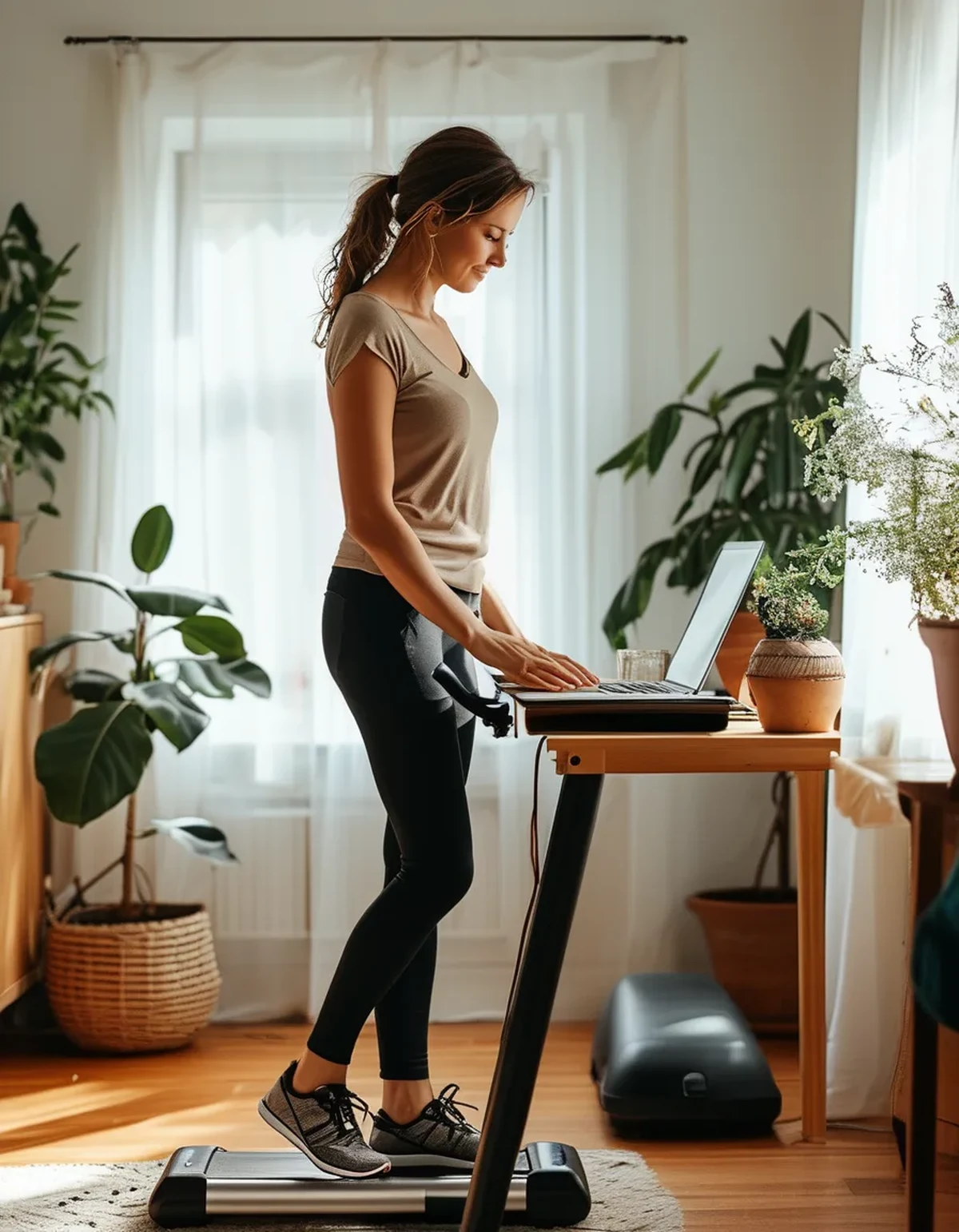
Raise the desk higher than your standing height. Stepping lifts you a couple of inches at mid-stride; a desk set for flat-footed standing forces a hunch. Set elbows to 90 degrees at mid-step, not at floor level. This single adjustment eliminates most of the wrist and shoulder complaints the combo gets blamed for.
Put a thick mat under the machine. It kills the floor-scarring, dampens the mechanism’s thunk for anyone below you, and stops the gradual walk-across-the-room migration cheap steppers perform on hard floors.
Wear real shoes. Supportive sneakers, not socks — hundreds of small steps on a small pedal is a genuinely bad barefoot workload. On the clothing side, anything with a fitted ankle behaves; wide hems catch pedal edges, which is why the reliable desk-stepper uniform ends up being sneakers plus leggings or tapered joggers.
Expect hydraulic hiss and plan for it. Most mini steppers use hydraulic cylinders that sigh audibly with each stroke. For calls, a decent headset mic ignores it; your open laptop mic will not.
Park it where your feet already go. Under the desk, pedals reachable without rearranging anything. A stepper you must fetch from a closet has a two-week life expectancy — the entire physics of the habit is that stepping is one step closer than not stepping.
What Nobody Tells You About the Desk-Stepper Combo
Your calves will file a complaint in week one. Continuous low-grade stepping is a novel workload even for runners, and the first week’s calf tightness convinces people the machine is hurting them. It is ordinary adaptation — start with 10-to-15-minute bouts, a few per day, and build toward accumulated hours over two to three weeks instead of stepping through a full Monday and limping through Tuesday.
The balance load is real and mostly good. A stepper has no handrail, so your stabilizers work the entire time — genuine bonus training — but it means the first sessions deserve your boring tasks only, and anyone with meaningful balance concerns should favor models with a handle or pair the machine with a desk edge within reach.
Cheap steppers advertise their quality through your ears and ankles: uneven hydraulic resistance between pedals teaches a subtle limp, and squeaks arrive by month two. Mid-tier machines with wider pedals and smoother cylinders cost modestly more and are the difference between equipment and clutter.
The metric that predicts success is not calories — it is step minutes per day, tracked casually. People who note their accumulated minutes keep the habit; people who weigh themselves to evaluate a stepper quit by week three, because the scale was never the right judge of a light-activity intervention.
And the honest failure mode: the stepper becomes a coat rack not from laziness but from red-bucket jobs. If your work is 90 percent precision focus, buy a walking pad for breaks instead — the stepper’s niche is the meeting-heavy calendar.
Stepper, walking pad, or under-desk bike — which fits your desk?
Three machines, three different jobs; the wrong pick explains most abandoned gear.
Mini stepper wins on footprint and price — shoebox-plus storage, no power cord, lowest cost — and its motion is compatible with standing-desk work as covered above. Weaknesses: hydraulic noise on calls, calf-dominant workload, and the balance demand. Best for: meeting-heavy schedules, small spaces, renters, and anyone whose desk is already standing height.
Walking pad delivers the most natural motion and the highest sustainable movement hours, with better typing compatibility for most people since gait sway is more familiar than step sway. Costs: real floor space, real money, a motor hum, and weight. Best for: full-time remote workers with room to dedicate and long focus blocks that tolerate slow walking.
Under-desk bike is the seated option — the only one of the three compatible with a fixed-height desk — and the quietest. It also has the lowest postural benefit, since you remain seated, and knee-desk clearance defeats more setups than any spec sheet admits: measure before buying.
The pattern across all three: the machine that matches your actual task mix and floor plan gets used; the one that matched a fantasy schedule gets sold in spring. If your calendar is calls, the stepper is the honest pick — and at its price point, the experiment costs less than the standing desk did.
FAQ: Under-Desk Stepper Questions, Answered
How many minutes a day should I aim for?
Accumulate 60 to 120 stepping minutes across the workday in 10-to-20-minute bouts once adapted — ambitious-sounding, but it maps to “most of your calls.” Any amount beats zero; the dose-response for light activity starts at the first minute.
Will it help me lose weight?
As one input, modestly: a couple of accumulated hours daily adds a few hundred calories of expenditure, meaningful over months alongside diet. As a standalone strategy, no — its best framing is metabolic hygiene and movement volume, with the scale governed elsewhere.
My knees complain on the stepper but not on walks — normal?
Common and usually fixable: shallow rapid steps load the knees more than slower full-range strokes, and worn shoes or a pedal-heights mismatch amplify it. Slow the cadence, use the full pedal travel, and stand taller. Pain that persists past those fixes means the machine is the wrong tool for your knees — stop negotiating with it.
Do the resistance knobs and twist features matter?
Barely, for desk use. Higher resistance turns work time into workout time, which defeats the multitasking premise, and twist-style steppers add lateral motion that fights typing entirely. Set resistance where conversation stays effortless and save the workout settings for non-work bouts.
TL;DR:
- Desk stepping converts sedentary hours into light activity — real metabolic and circulation benefits, but not a cardio substitute.
- Sort tasks into green (calls, reading — step), yellow (light typing — step slowly), red (precision work — feet still) and claim only the green hours.
- Setup decides survival: desk raised for mid-step height, thick mat, real sneakers, headset mic, machine permanently underfoot.
- Build up over two weeks to spare your calves, track step minutes not pounds, and pick a walking pad instead if your day is all focus blocks.
Count tomorrow’s meeting hours on your calendar — that number is your stepping budget. If it is two or more, the stepper earns its spot under the desk within a month.
Keep Reading
This article is for general informational and styling purposes only. Fit, sizing, and product availability may vary.