Should You Actually Use the Arm Bands on a Mini Stepper?
Quick Answer: The bands add roughly 5 to 10 percent to total calorie burn and give the upper body some light work, but they only help if you keep your torso upright and pull from the back rather than the arms. Most people lean forward and use the bands for balance, which cancels the lower body benefit. Use them for one or two intervals rather than the whole session, and drop them entirely if your posture changes when they are in your hands.
The bands are the most-ignored accessory in home cardio. They are also the fastest way to turn a decent stepper session into a hunched, shoulder-dominant shuffle. Whether they are worth using comes down to one thing you can check in ten seconds.
Do the arm bands actually increase calorie burn?
Modestly, and less than the packaging suggests.
Adding upper body movement to a lower body cardio exercise raises energy expenditure because you are recruiting more muscle mass. The measured effect for light band work during stepping is around 5 to 10 percent — so a 150-calorie session becomes maybe 160 to 165.
That is not nothing over a month, but it is small compared to what a slightly higher step rate would give you. Increasing your cadence by 10 steps per minute typically does more for total burn than the bands do.
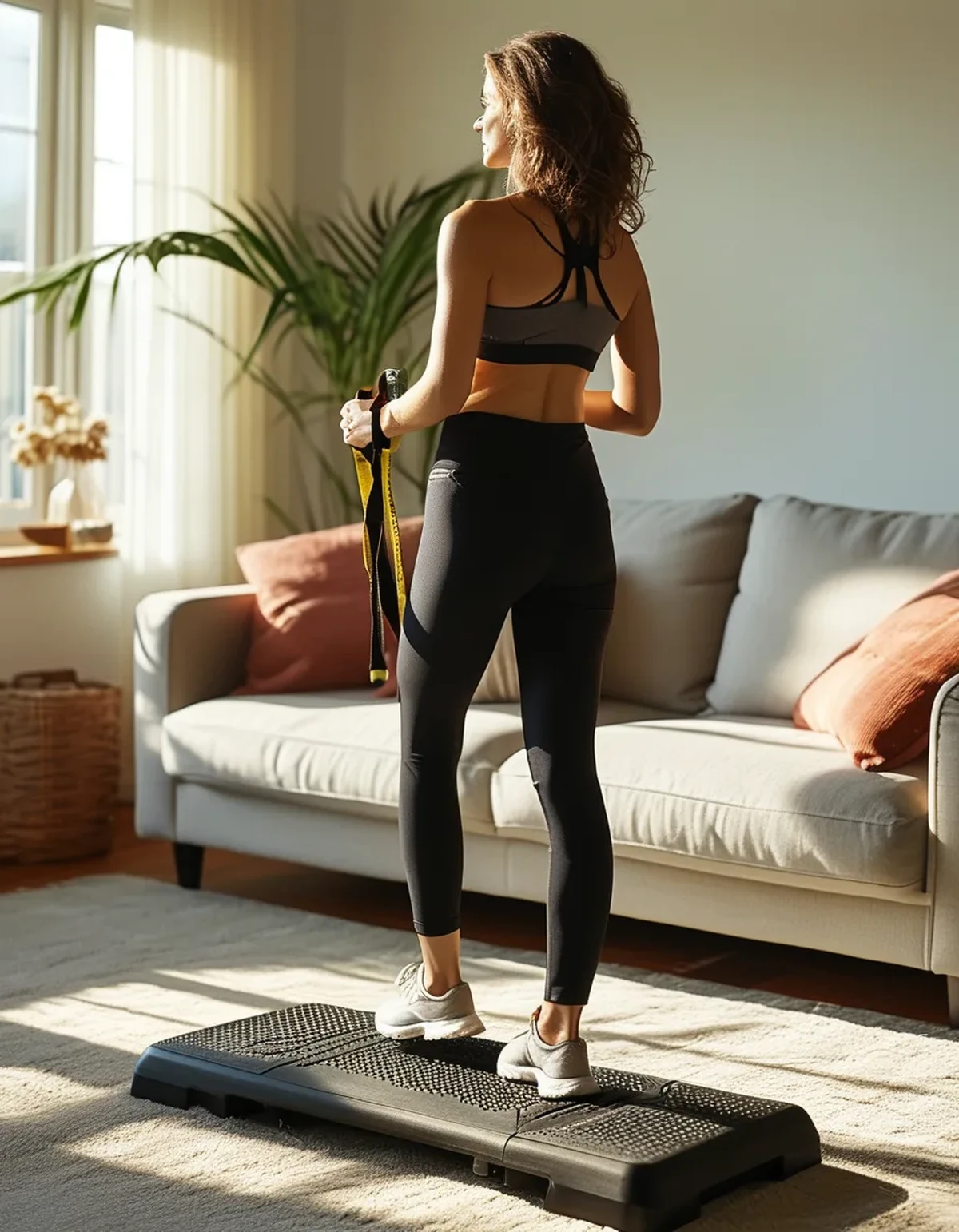
The bands’ real contribution is different: they give your arms something to do, which stops you from bracing on furniture or a wall. The single biggest form problem on a mini stepper is offloading weight through the arms, and if the bands prevent that, they are earning their place regardless of the calorie math.
They also make the session feel more engaging, which for a machine people abandon in week three is a legitimate benefit.
What is the correct way to hold and pull them?
Three rules, and the first one matters most.
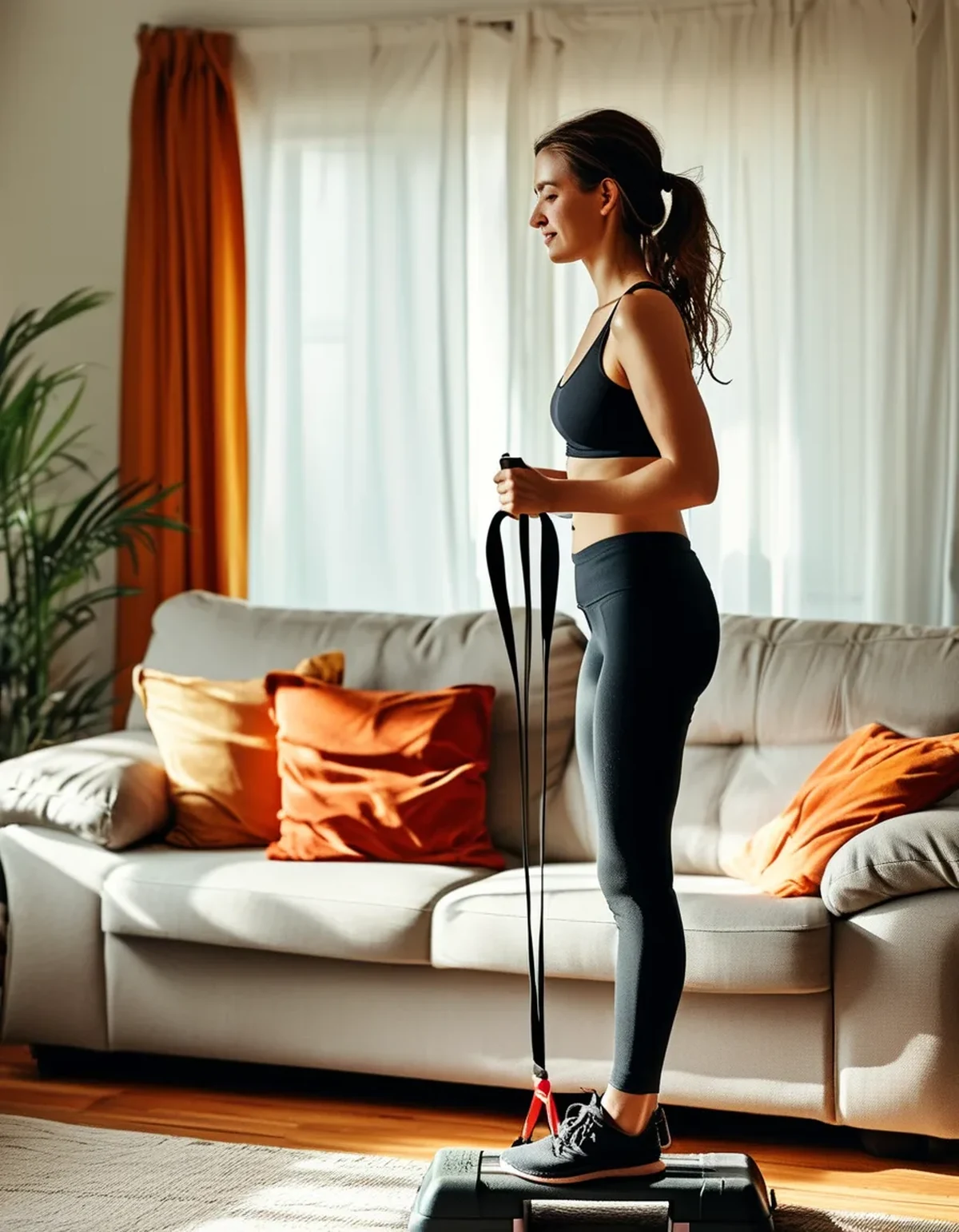
Stand tall. Your ears should be over your shoulders and your shoulders over your hips. The moment you lean forward, the stepper stops loading your glutes and starts loading only your quads and calves.
Pull from the back, not the biceps. Think of drawing your shoulder blade down and back before your elbow bends. Most people curl the band like a dumbbell, which trains almost nothing and encourages the shoulders to creep toward the ears.
Keep the movement small and slow. A short controlled pull to roughly ribcage height, then a slow return. Big swinging pulls throw your balance off on a platform that is already unstable, and the momentum means the band is doing very little actual work.
Band tension should be light enough that you can keep stepping at your normal rate. If your legs slow down when the bands come up, the tension is too high and you are turning a cardio session into a poor strength session.
When should you skip the bands entirely?
Four situations where they are actively unhelpful.
When you are watching something or working. Bands demand attention. If the point of your stepper is 30 low-effort minutes during a show, adding a coordination task means you will do it badly or stop early.
When your balance is not solid yet. New steppers should spend the first two weeks establishing a stable rhythm with hands free at your sides. Introducing bands before that is how people end up gripping a chair.
When you have shoulder or neck issues. Repetitive light pulling with poor scapular control is a reliable way to aggravate an existing shoulder problem. If your neck tightens during the session, the bands are the first thing to remove.
When you already lift. If you strength train twice a week, your upper body is being trained properly. Light band pulls add fatigue without adding stimulus. Use the stepper as cardio and let the lifting do its job.
A reasonable compromise: use the bands for two three-minute blocks in a 25-minute session and leave them alone the rest of the time.
Myth vs Fact: Mini Stepper Bands
Myth: The bands turn a stepper into a full-body workout. Fact: They add light upper body activity, not resistance training. The tension in a standard stepper band is roughly equivalent to a 2 to 5 pound dumbbell, which is below the threshold that builds strength for most adults.
Myth: Holding the bands helps your balance. Fact: The opposite. Anchoring your hands to a moving platform means your upper body follows the platform’s wobble. Balance improves faster with hands free.
Myth: More band tension means a better workout. Fact: Higher tension slows your step rate, and step rate is what drives heart rate. Aggressive bands make the session feel harder while burning less.
Myth: You should use them the whole session for maximum benefit. Fact: Continuous band work over 20 or 30 minutes almost always degrades posture in the second half. Interval use preserves form and captures most of the benefit.
Myth: Broken bands mean the machine is done. Fact: Bands are the first component to wear out and are widely sold as replacements for $8 to $15. Fraying at the handle attachment is normal after a year of use and is not a reason to replace the stepper.
How do you get more out of a stepper without the bands?
Four adjustments that outperform band work.
Vary your cadence. Two minutes at a comfortable pace, one minute noticeably faster, repeated. Interval structure raises average heart rate more than any accessory does and requires nothing extra.
Change your foot position. Feet slightly wider shifts emphasis toward the outer glutes; feet closer together loads the quads more. Alternating every five minutes keeps the session from feeling like a single repetitive motion.
Add a hold. Pause for two seconds at the bottom of each step for a set of ten. It is harder than it sounds and it builds the control that makes the whole motion smoother.
Watch the resistance dial. Many people leave it where it arrived. Higher hydraulic resistance means slower deeper steps and more glute involvement; lower means faster steps and more cardiovascular demand. Both are useful — just choose deliberately.
As mornings cool over the next month, a stepper session becomes a genuinely appealing alternative to a cold outdoor walk. Worth having the form dialed in before it becomes your main option.
FAQ: Mini Stepper Band Questions, Answered
Can I use my own resistance bands instead?
Yes, and better ones are often a real upgrade. Look for tube-style bands with padded handles in the 5 to 15 pound range, and check that your stepper has proper anchor points rather than relying on hooks that were sized for the originals.
Why do my shoulders hurt after using the bands?
Almost always because the pull is starting at the elbow rather than the shoulder blade, with the shoulders shrugging up. Drop the tension, slow the movement, and consciously set the shoulder blade down before each pull. If it persists, stop using them.
Do the bands help with arm toning?
Not meaningfully on their own. Visible arm definition comes from a combination of muscle development and body composition, and light band pulls during cardio contribute very little to either. Two proper strength sessions a week will do far more.
TL;DR:
- Bands add roughly 5 to 10 percent to calorie burn — real, but smaller than a modest cadence increase.
- Their genuine value is stopping you from bracing on furniture, which is the most common stepper form error.
- Pull from the shoulder blade, stay upright, and keep the tension light enough that your legs never slow down.
- Use them in short intervals rather than the whole session, and skip them entirely if you already strength train.
Do the ten-second check tomorrow: film five seconds of stepping with the bands. If you are leaning forward, put them down — the machine works better without them.
Keep Reading
This article is for general informational and styling purposes only. Fit, sizing, and product availability may vary.